How Childhood Relationships Shape Who We Become: What the Research Says
By Dana Kerford, Founder of URSTRONG
As someone who’s been championing friendship skills for over two decades, I can’t tell you how excited I am to see this new research! It’s incredibly rare to find fresh, large-scale studies exploring the long-term impact of kids’ friendships – and this one is truly groundbreaking. Published in the Journal of Personality and Social Psychology, this 30-year longitudinal study followed children from early childhood into adulthood to explore one big question:
👉 How do our early relationship experiences shape the way we connect with others as adults?
This is cutting-edge science confirming what we’ve always believed at URSTRONG — that teaching kids how to be good friends isn’t just about playground peace; it’s about shaping who they’ll become as people. And the findings powerfully affirm the importance of what we teach through URSTRONG’s Friendology friendship skills curriculum.
💞 A Quick Refresher: What is Attachment Theory?
Attachment theory was developed in the 1970s and early ’80s by British psychiatrist and psychoanalyst John Bowlby, who proposed that the ways adults think, feel, and behave in relationships are shaped by their earliest bonds — especially with their caregivers.
In simple terms, Bowlby’s theory suggested that our early relationships create a sort of “internal blueprint” for how we trust, connect, and depend on others. If we felt safe, loved, and supported as children, we’re more likely to feel secure in our relationships as adults. If those early bonds were unpredictable, distant, or stressful, we might struggle with closeness or trust later in life.
Over time, however, researchers have refined this theory, recognizing that our attachment styles aren’t fixed. They’re shaped and reshaped by multiple relationships across our lifetime — not just those with our parents. That’s where this new study makes a huge contribution.
🔍 What This New Study Found
The research tracked people for over 30 years, examining how their early relationships with their mothers, fathers, friends, and romantic partners influenced how secure they felt in relationships as adults.
Here’s what the researchers discovered:
- Early bonds with mothers played a particularly strong role in shaping long-term attachment security. Children who experienced warmth, sensitivity, and closeness with their mothers were more likely to have healthy, trusting relationships as adults.
- Early friendships also had a major impact — especially on how adults approached friendships and romantic relationships later in life.
- Social competence (a child’s ability to get along with peers, show empathy, and resolve conflict) predicted stronger, more secure attachment patterns across every kind of relationship.
- Experiences with fathers and early romantic partners were more complex and varied — sometimes showing positive effects, sometimes not — depending on timing and context.
In short: the quality of a child’s relationships, especially with their mothers and peers, helps shape the foundation for emotional health and relationship success throughout life.
🧠 Why Friendships Matter So Much
One of the most fascinating findings was how much friendship experiences mattered. Friendships during childhood and adolescence help children practice the key ingredients of what psychologists call “horizontal attachment relationships” — relationships between equals that involve empathy, support, compromise, and repair.
When children learn how to navigate Friendship Fires, stand up for themselves respectfully, and show kindness even when it’s hard, they’re not just building social skills — they’re wiring their brains for healthy, reciprocal relationships later in life.
This is exactly what we teach through our Friendology friendship skills curriculum.
💡 What This Means for Parents & Educators
This research reinforces something we’ve always known: relationship education is mental health education.
When schools and families intentionally teach kids how to communicate kindly, manage conflict, and understand what healthy friendship looks and feels like, we’re doing so much more than helping them “get along.”
Our URSTRONG Schools are:
- Building their emotional regulation and empathy.
- Helping them form secure, trusting relationships.
- Giving them the foundation for strong mental health and wellbeing in adulthood.
🌈 Why Friendology Matters
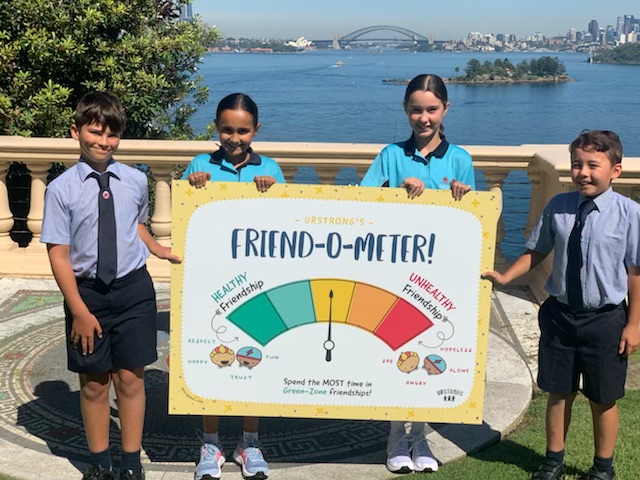
At URSTRONG, we believe that friendship skills are life skills. Our Friendology curriculum gives children the tools and language to handle relationship challenges, express kindness, and build emotional resilience.
This study confirms that these early friendship experiences don’t just shape how kids relate to each other now — they influence how they love, trust, and connect as adults.
So when we teach children to be kind-on-purpose, to repair Friendship Fires, and to recognize what healthy friendship feels like, we’re not just improving playground dynamics.
👉 We’re nurturing emotionally intelligent, securely attached humans — setting them up for happier, healthier relationships for life.