There are few things harder as a parent than watching your child stay in a friendship that doesn’t feel good.
Maybe they’re coming home upset almost every day. There’s constant drama, exclusion, jealousy, or controlling behaviour. Maybe you’ve noticed your child just isn’t quite themselves around this friend.
Your instinct might be to say: “Just stop being friends with them!”
But friendships are rarely that simple for kids. They share classrooms, friendship groups, teams, lunch tables, and playgrounds. And sometimes a child can know a friendship isn’t healthy while still desperately wanting it to work.
As parents and educators, our job isn’t to choose our child’s friends. Instead, our job is to stay on the sidelines, being Friendship Coaches. We want to help them recognise patterns and make healthy friendship choices for themselves.
1. Start with a Friend-o-Meter Check-In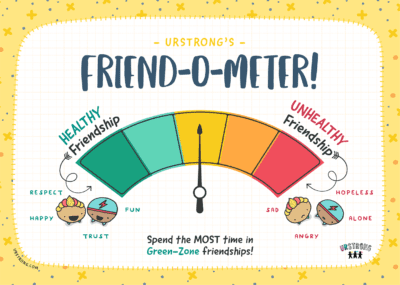
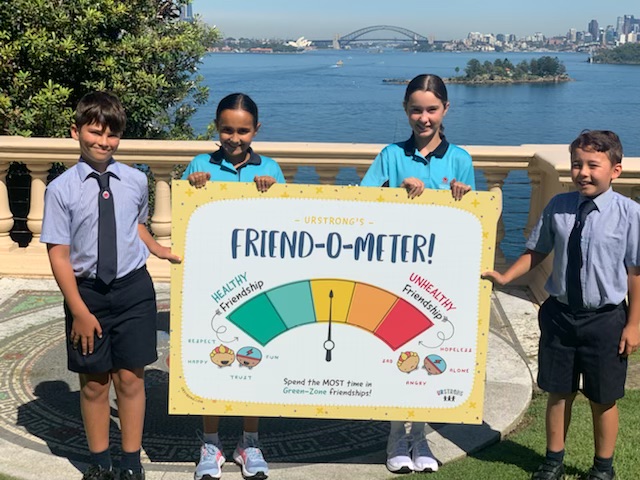
The Friend-o-Meter helps children tune into how their friendships feel.
When a friendship is in the Green-Zone, it feels good. There’s trust & respect (Friendship Fact #3), your child can be themselves, they are getting along, and Friendship Fires® (our term for conflict) are put out quickly. A healthy friendship has mostly Green-Zone interactions.
When a friendship is in the Red-Zone, it feels bad. Perhaps a Friendship Fire® is burning out of control and/or a child is feeling unhappy, unsafe, disrespected, controlled, or unable to be themselves. An unhealthy friendship has mostly Red-Zone interactions.
Remember Friendship Fact #1: No friendship is perfect. One Friendship Fire doesn’t make a friendship unhealthy. We’re looking for patterns.
Try a simple daily check-in: “How did it go with [friend’s name] today? What colour was the friendship on the Friend-o-Meter?”
Then get curious:
- “What happened that made it feel Red?”
- “Were there any Green or Yellow moments?”
- “How did you feel when you were with them?”
Definitely DO NOT label the other child as “toxic,” “mean,” or a “bad friend.” Instead, focus on the friendship and their feelings: “Do you think this friendship is feeling healthy for you right now?”
2. Spend Less Time
Children sometimes think they only have two choices: stay best friends or end the friendship. There’s a huge space in between.
Our Spend Less Time strategy (view the full activity here) helps children make small, healthy choices throughout their school day to decrease their daily dose of a fiery friendship.
Ask: “Where could you Spend Less Time tomorrow?”
Maybe they could sit with someone else on the bus, choose another partner, play a different game at recess, or spend time with another friend at lunch. Even little moments, like where they stand in line or who they sit beside, are opportunities to make a healthy choice.
You might say: “You don’t have to make one giant decision about this friendship today. Let’s just think about tomorrow. Where could you get a little less Red and a little more Green?”
3. Increase their Daily Dose of Green-Zone
This is just as important as Spending Less Time in Red-Zone Friendships.
Ask your child:
- “Did you have any Green-Zone moments with other friends today?”
- “Who makes you feel most like yourself?”
- “Who treats you with Trust & Respect?”
Then help create opportunities for those friendships to grow like: organise a playdate (one-on-one time is one of the fastest ways to hotwire a new friendship!), encourage a different lunchtime activity, invite someone over, or reconnect with another friend.
Sometimes the best way to loosen the grip of a Red-Zone Friendship is simply to increase their daily dose of Green-Zone Friendships.
4. Can the Friendship Fires Be Put Out?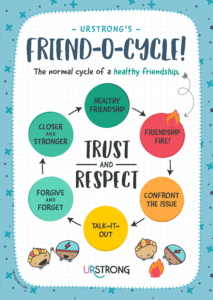
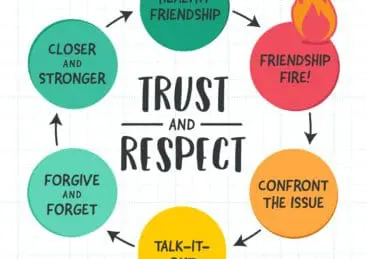
Friendship Fires are normal. The important question is whether the friends can Talk-it-Out and put the Fire all the way out. This is where the Friend-o-Cycle comes in!
After a Friendship Fire, ask: “How did your friend respond when you told them how you felt?” Did they listen? Did they care? Did your child feel heard? Did something actually change?
Friendship Fact #3 reminds us that Trust & Respect are the two most important qualities in a friendship. So, rather than focusing only on apologies or promises, help your child notice patterns: “Do you feel like the friendship is moving into the Yellow or Green-Zone, or do the same Red-Zone moments keep happening?”
5. For Older Kids: Notice the Fork-in-the-Road Moments
As children get older, friendship choices become more complicated. A Fork-in-the-Road Moment happens when staying connected to a friend or friendship group means compromising something important about themselves. Give this activity a try!
Maybe the group is gossiping or excluding someone. Maybe there’s pressure to do something they know isn’t right. Maybe your child finds themselves changing who they are just to stay accepted.
Try: “It sounds like this might be a Fork-in-the-Road Moment. What choice feels true to who you are?”
Or: “Are you having to change who you are to stay in this friendship?”
These moments help children learn an incredibly important lesson: A friendship should never require you to abandon your values to belong.
A Simple Friendship Challenge:
If your child feels stuck, take the pressure off making one big decision.
For one week, encourage them to:
- Do a quick Friend-o-Meter Check-In each day.
- Find one opportunity to Spend Less Time in the Red Zone.
- Find one opportunity to Spend More Time in the Green Zone.
At the end of the week, ask:
- “What did you notice?”
- “When did you feel happiest?”
- “Who brought out the best in you?”
- “What happened when you spent less time in that friendship?”
You’re helping your child gather their own evidence and learn to trust what their friendships are telling them.
Remember: Friendships Change…and That’s Okay
Friendship Fact #4 reminds children that friendships change…and that’s okay. A friendship can have been amazing once and not feel right anymore. Children can appreciate the good memories while recognising that they need a little more distance now.
And if they keep going back? Keep coaching. Instead of “I told you this would happen!”, try: “I’m sorry today was hard. What colour would you give the friendship today? What do you think you want to do tomorrow?”
Our job as Friendship Coaches isn’t to solve every friendship problem for our children. It’s to give them the language, strategies, and confidence to make healthy friendship choices for themselves…now and in the future.

Written by: Dana Kerford
Founder, Friendology