How to stay in your role as a Friendship Coach…without making the Fire bigger!
There are few things that activate our protective instincts faster than hearing that our child has done something hurtful. Maybe another parent approaches you at pick-up. Maybe you receive a text:
“Just wanted to let you know what happened between the kids today…” And… cue the Mama/Papa Bear reaction. Your heart rate goes up. Your defences kick in. You want to explain, investigate, defend your child, or perhaps march straight home and demand answers.
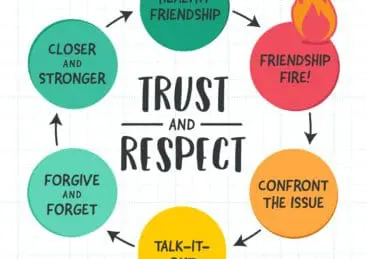
I get it. Nobody is objective when it comes to their own child. We love them fiercely and we’re wired to protect them. But when it comes to everyday Friendship Fires® (our coined term for conflict in a friendship), this is exactly the moment when we need to remember our role.
You are the Friendship Coach. Your child is the player. And often, the very best coaching happens from the sidelines.
Why Kids Are Afraid to Tell Us
One of the biggest reasons children hesitate to tell their parents about Friendship Fires is simple: they’re worried we’ll get involved. They worry we’ll call the other parent. Email the school. Confront the friend. Send a text. Make it awkward.
In other words, they’re worried we’ll make the Fire bigger. And, I’m afraid to say… sometimes we do. (Parents and teachers are guilty of this!)
Our involvement can unintentionally send children the message: You couldn’t handle this without me.
Instead, we want our children to hear: “You’ve got this. I’m right here on the sidelines, but you’re the player. You can do it!”
That’s the heart of being a Friendship Coach. We listen. We empathise. We help them make sense of what happened. We remind them of the strategies they know. And then, whenever it is safe and appropriate, we let them practise.
Because friendship skills are just that: skills. Children develop them by using them.
When Another Parent Brings You a Friendship Fire
This is where things get tricky. When another parent tells us our child has done something wrong, two parents are now looking at the same situation through two very different (and very emotional) lenses.
Neither parent was likely there. Neither parent is completely objective. And both love their child fiercely.
Psychologists have long studied our tendency to give negative information disproportionate attention and weight – often referred to as a negativity bias. Negative impressions can be quicker to form and harder to undo.
So, when someone tells you, “Your child excluded mine,” it can be surprisingly easy for one moment to become a judgement about a child:
- She’s controlling.
- He’s mean.
- She always causes drama.
Whoa. Hold up. We’re talking about a child.
Suddenly, we’re no longer talking about something a child did. We’re deciding who that child is. That’s a very unfair leap.
Children Deserve Unconditional Positive Regard
Psychologist Carl Rogers famously described Unconditional Positive Regard as an attitude of caring for and accepting the worth of a person regardless of their behaviour. In simple terms: the child is not the behaviour.
A child can make a poor choice without being a bad child. A child can exclude someone and still be kind. A child can say something hurtful and still deserve compassion. A child can lie, lose their temper, gossip, overreact, or spark a Friendship Fire…and still be a good kid who is learning.
And here’s the part I really want us, as parents, to sit with: We give our own children this grace all the time.
We know they’re tired. We know they were overwhelmed. We know there’s another side to the story. We know they’re still learning.
Can we offer that same generosity to someone else’s child? (Of course, we can. And we must.)
I’ve heard many parents say, “it takes a village” and they whole-heartedly believe that they have a responsibility to get involved in kids’ friendship issues. They feel it’s their job as a parent to let the other parent know. And, it’s a nice thought – the intention is good. But, this mentality falls apart when parents cannot be objective about ALL children. We want the village to understand our child’s mistakes, intentions, temperament, bad days, and growing brain…but we don’t always extend that same understanding to the other children in the village.
Other people’s children are growing and learning too.
Remember: You’re Hearing a Child’s Version of the Story
Children tell stories. Some children straight-up lie, while others tell stories that veer off in all sorts of interesting directions. (Have you ever had a child explain a situation to you and it made absolutely zero sense? Right! They have beautiful imaginations!)
 Children can accurately remember and report experiences. However, research also shows that children’s accounts are heavily influenced by developmental factors including age, memory, language, emotion, perspective, and even how adults ask questions.
And, Friendship Fires are messy. Your child might say: “They wouldn’t let me play.” But, perhaps they were already in the midst of a game with someone else.
“He ignored me all day.” But, perhaps he didn’t hear them or was preoccupied with something else.
“She was so mean to me.” Maybe she simply did not share the special treat their parent packed in their lunch for them.
Or maybe (brace yourself for this one!) your child contributed to the Friendship Fire too and is pointing the finger entirely at their friend!
The point isn’t to dismiss what your child tells you. Believe their feelings without assuming you have all the facts. In fact, assume there’s a whole lot more to the story!
Try: “That sounds like it really hurt. Tell me more about what happened.” Rather than: “She did WHAT?! That’s terrible. I’m calling her mom.”
Your reaction matters. A lot.
This Is Where Teachers Can Be Invaluable
If a Friendship Fire is happening at school and your child needs more support, let the teacher know. Not because the teacher needs to swoop in and fix it either, but because educators can be wonderful Friendship Coaches.
Teachers often have something parents don’t: context. They may have witnessed what happened beforehand. They know the friendship dynamics. They see both children interacting with other peers. They may know this was an isolated incident – or recognise a pattern that genuinely needs attention.
And. while teachers are human and aren’t perfectly objective either, they are often better positioned to approach the situation without the powerful protective instinct a parent understandably feels.
Research consistently finds that supportive teacher-student relationships matter for children’s wellbeing, behaviour, and social competence with peers. A great teacher can help both children feel heard while holding them accountable – without turning either child into the villain.
That’s the goal. No villains. Just kids learning friendship skills.
What Should You Say to the Other Parent?
If another parent approaches you about an everyday Friendship Fire, you don’t need to investigate the case together. You’re not an Investigator, you’re a Coach!
You can be warm, compassionate, and calm: “Thanks for letting me know. I’m sorry to hear they’re having a Friendship Fire. I’ll check in with my child and do some coaching at home. It might also be worth letting their teacher know so they can support both kids at school.”
And then… stop. You don’t need to compare stories. You don’t need screenshots. You don’t need witness statements from three nine-year-olds. You don’t need to determine who’s guilty. And, you certainly don’t need to psychoanalyze their entire life. Again, it’s a child we’re talking about here.
Plus, the last thing YOU need is a Friendship Fire with the parent about the children’s Friendship Fire! (I’ve sadly heard about this happening more often that you might expect!)
Take the information. Coach your own child. Let the teacher know if support is needed. Then, give the children an opportunity to use their skills.
Kids Often Move On Faster Than We Do
This one actually cracks me up because parents will often hold grudges far longer than children do. Children can have a massive Friendship Fire on Tuesday and be happily playing together again on Wednesday.
Meanwhile, we’re still thinking: I haven’t forgotten what she did to my baby in Year 2…
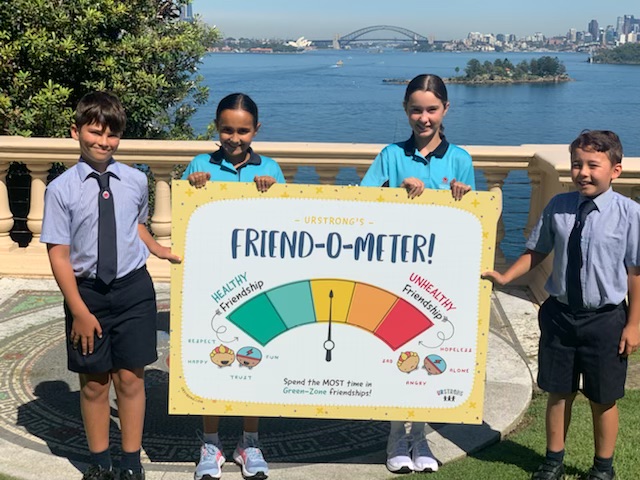
When adults hold onto resentment toward another child or family, we can unintentionally make it harder for children to repair their friendship naturally. Your child might already be back in the Green-Zone while you’re still sitting in the Red-Zone on their behalf.
Children are learning. They’re impulsive. Emotional. Inexperienced. Sometimes wonderfully kind and sometimes spectacularly messy. (Good thing they’re cute!)
Our job isn’t to make sure they never have Friendship Fires. Our job is to help them learn how to put them out.
Stay on the Sidelines
Of course, there are times adults must step in. Safety concerns, “bullying” (our definition is simple: ongoing, Mean-on-Purpose behavior), threats, discrimination, significant power imbalances, or repeated harmful behaviour require adult intervention.
But an ordinary Friendship Fire is different. Before stepping onto the field, ask yourself:
- Is my child unsafe or uncomfortable?
- Does this need adult intervention or Friendship Coaching?
- Am I helping my child build a skill or taking away their opportunity to practise that skill?
And, importantly, this one:
- Am I giving the other child the same grace and understanding I’d hope another parent would give mine?
Then remind your child: “You’ve got this. I’m right here on the sidelines if you need me. But you’re the player.” Sometimes the greatest vote of confidence we can give our children is resisting the urge to solve the problem for them. Because our goal isn’t to raise children who never experience Friendship Fires. It’s to raise children who know what to do when they do. And, for the record, I LOVE ALL of your children – flaws and all!
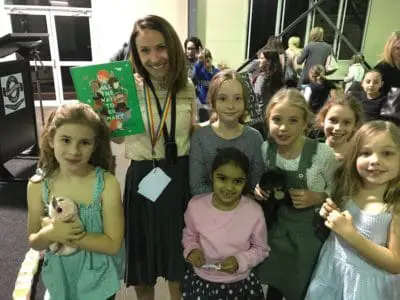
Written by: Dana Kerford
Founder, Friendology